How Answer Engine Optimization Differs From Traditional SEO for Small Businesses
By Jessica Spear, C.I.S. Digital, LLC
In the rapidly evolving landscape of digital marketing, small businesses face the challenge of standing out in a crowded marketplace. Understanding the differences between Answer Engine Optimization (AEO) and traditional Search Engine Optimization (SEO) is crucial for enhancing online visibility and driving customer engagement. This article delves into the nuances of AEO, highlighting its mechanisms, benefits, and implementation strategies tailored specifically for small businesses. As consumers increasingly rely on AI-driven search engines for quick answers, AEO emerges as a vital strategy that prioritizes direct responses over traditional ranking methods. We will explore key distinctions, the benefits of AEO, and practical techniques for effective implementation, ensuring small businesses can leverage these insights for optimal digital marketing success.
Key Distinctions:
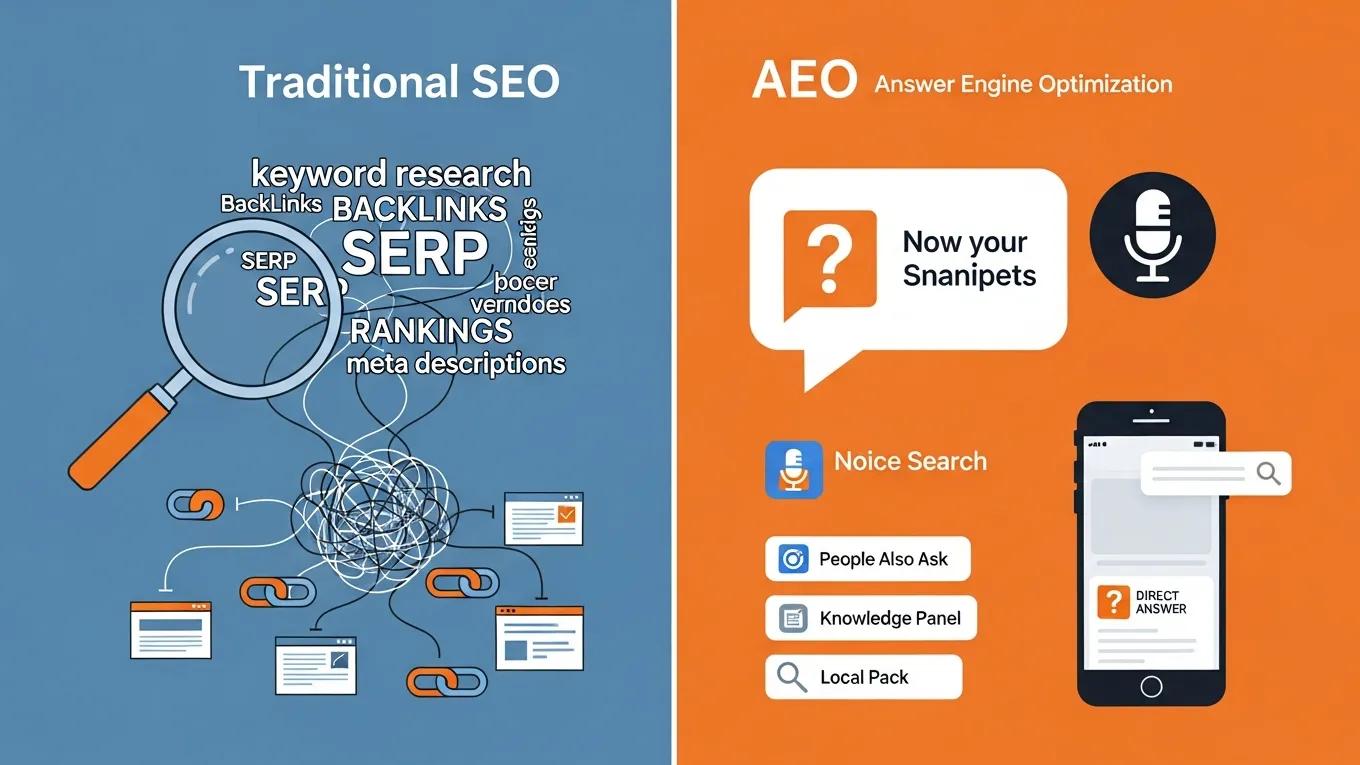
Understanding the fundamental differences between AEO and traditional SEO is essential for small businesses aiming to optimize their online presence.
Focus of Optimization:
Traditional SEO primarily focuses on improving website rankings in search engine results pages (SERPs) through keyword targeting and backlink strategies. In contrast, AEO emphasizes providing direct answers to user queries, enhancing the likelihood of appearing in AI-generated responses. This shift in focus reflects a broader trend towards semantic search, where understanding user intent takes precedence over mere keyword placement.
Content Format:
The content format also varies significantly between AEO and traditional SEO. While traditional SEO often relies on structured content, such as blog posts and articles, AEO favors conversational formats that align with how users naturally ask questions. This includes optimizing for voice search and creating content that directly addresses common queries, making it more accessible and engaging for users.
Measurement of Success:
Success metrics differ between the two approaches. Traditional SEO measures success through traffic and ranking improvements, while AEO evaluates visibility in AI responses and user engagement. This shift necessitates a new set of tools and strategies for small businesses to effectively gauge their performance in the AEO landscape.
Benefits of AEO for Small Businesses:
AEO offers several advantages that can significantly enhance the digital marketing efforts of small businesses.
- Increased Trust and Conversion: By providing direct answers to user queries, businesses can build trust and credibility, leading to higher conversion rates.
- Proactive Visibility: AEO allows small businesses to proactively appear in search results, even for queries they may not have traditionally targeted.
- Targeted Audience Engagement: AEO enables businesses to engage with their audience more effectively by addressing specific questions and concerns, fostering a deeper connection with potential customers.
C.I.S. Digital specializes in helping small businesses harness the power of AEO through tailored digital marketing solutions. Their expertise in SEO, content marketing, and paid advertising ensures that businesses can effectively enhance their online presence and drive revenue growth.
Implementation Techniques:

Implementing AEO requires a strategic approach that aligns with the unique needs of small businesses.
- Content Restructuring: Businesses should restructure their content to focus on answering common questions and providing valuable insights that resonate with their target audience.
- Technical Optimization: Ensuring that websites are technically optimized for AEO involves implementing structured data and schema markup to enhance search engine understanding.
- Query Mapping: Identifying and mapping user queries to relevant content can help businesses create targeted responses that improve their chances of appearing in AI-generated results.
What Is Answer Engine Optimization and How Does It Enhance Small Business Digital Marketing?
Answer Engine Optimization (AEO) is a modern approach to digital marketing that focuses on optimizing content for AI-driven search engines. By prioritizing direct answers to user queries, AEO enhances the visibility of small businesses in search results, ultimately driving more traffic and engagement. This approach is particularly beneficial for small businesses, as it allows them to compete effectively against larger competitors by providing valuable, easily accessible information to potential customers.
How Voice Search Optimization Integrates With AEO for Small Businesses
Voice search optimization plays a crucial role in AEO, as it aligns with the conversational nature of user queries. Small businesses can enhance their AEO strategies by optimizing content for voice search, ensuring that they address common questions in a natural, conversational tone. This integration not only improves visibility in search results but also enhances user experience, making it easier for customers to find the information they need.
What Are the Fundamental Principles of Traditional SEO for Small Business Websites?
Traditional SEO is built on several core principles that have guided digital marketing strategies for years. These include:
- Keyword Targeting: Identifying and targeting specific keywords that potential customers are searching for.
- On-Page SEO Techniques: Implementing best practices for optimizing website content, including meta tags, headings, and internal linking.
- Backlink Building: Establishing authority through quality backlinks from reputable sources.
While these principles remain important, the rise of AEO necessitates a shift in focus towards understanding user intent and providing direct answers.
What Are the Key Differences Between Answer Engine Optimization and Traditional SEO?
The key differences between AEO and traditional SEO can be summarized as follows:
- Methodologies: AEO focuses on direct answers and user intent, while traditional SEO emphasizes ranking and traffic.
- Target Audiences: AEO targets users seeking immediate answers, whereas traditional SEO targets users looking for information through search engines.
Comparing Focus: Semantic Search Versus Keyword Targeting
The transition from keyword targeting to semantic search represents a significant shift in digital marketing strategies. Semantic search prioritizes understanding user intent and context, allowing businesses to create content that resonates with their audience. This approach enhances the effectiveness of AEO, as it aligns with the way users naturally ask questions and seek information.
Impact of Structured Data and Featured Snippets on Search Visibility
Structured data and featured snippets play a vital role in enhancing search visibility for small businesses. By implementing structured data, businesses can provide search engines with clear information about their content, increasing the likelihood of appearing in featured snippets. This visibility not only drives traffic but also establishes authority and trust with potential customers.
Further emphasizing the importance of structured data, research highlights its role in improving visibility and delivering personalized search results.
Structured Data for SEO Visibility & Personalized Results The use of structured data in healthcare websites can increase the visibility of health resources through search engine optimization (SEO), show rich, personalized results to target users, and allow the website to serve as a living digital directory of resource information for patients. Utilization of Structured Data to Improve Visibility of Digital Health Websites, S Mitragotri, 2025
Why Is Answer Engine Optimization Increasingly Important for Small Business Digital Marketing?
As digital marketing continues to evolve, AEO is becoming increasingly important for small businesses. The rise of AI-driven search engines and voice search has changed the way consumers seek information, making it essential for businesses to adapt their strategies. AEO allows small businesses to remain competitive by providing direct answers to user queries, ultimately enhancing their online presence and driving customer engagement.
How Can Small Businesses Implement Effective Answer Engine Optimization Strategies?
To implement effective AEO strategies, small businesses should consider the following steps:
- Conduct a Content Audit: Evaluate existing content to identify opportunities for optimization and restructuring.
- Create Targeted FAQ Pages: Develop FAQ pages that address common customer queries, enhancing the chances of appearing in AI-generated responses.
- Utilize Structured Data: Implement structured data markup to improve search engine understanding and visibility.
Step-by-Step Guide to Structured Data Markup and FAQ Schema Implementation
Implementing structured data and FAQ schema can significantly enhance a small business's AEO efforts. Here’s a step-by-step guide:
- Identify Relevant Content: Determine which pages or content types would benefit from structured data.
- Choose the Right Schema Markup: Select the appropriate schema markup for your content, such as FAQ schema for question-and-answer formats.
- Implement and Test: Add the structured data to your website and use testing tools to ensure it is correctly implemented.
Optimizing Content for Voice Search and Semantic Search Techniques
To optimize content for voice search and semantic search, small businesses should focus on:
- Using Natural Language: Write content in a conversational tone that mirrors how users speak.
- Answering Common Questions: Identify and address common questions related to your business or industry.
- Utilizing Long-Tail Keywords: Incorporate long-tail keywords that reflect natural speech patterns and user intent.
What Tools and Resources Support Small Businesses in Monitoring and Enhancing AEO Performance?
Several tools and resources can assist small businesses in monitoring and enhancing their AEO performance:
- AI Visibility Audit Tools: These tools help assess how well a business's content is optimized for AI-driven search engines.
- Content Management Systems: Platforms that facilitate the creation and optimization of content for AEO.
- Analytics Tools: Tools that provide insights into user behavior and engagement, helping businesses refine their AEO strategies.
To further enhance your digital marketing efforts, consider exploring the "digital marketing solutions" offered by C.I.S. Digital. They provide tailored strategies to help small businesses thrive in the competitive online landscape.
For small businesses looking to enhance their online presence, understanding the nuances of AEO is crucial. Contact us today to learn more about how C.I.S. Digital can help you optimize your digital marketing strategies and drive revenue growth.