Embracing AEO: Strategy for Small Business Digital Marketing
The way people search for information has changed fundamentally. Search engines no longer simply return a list of blue links for a user to sift through — they increasingly generate direct, synthesized answers. Platforms such as Google's AI Overviews, Bing Copilot, Perplexity, and voice assistants now interpret a query, pull from multiple sources, and present a single consolidated response. For businesses, this shift makes one strategy essential: Answer Engine Optimization, or AEO.
At C.I.S. Digital, we view AEO not as a replacement for sound search strategy but as its necessary evolution. Businesses that adapt their content to be understood, trusted, and surfaced by answer engines will maintain visibility. Those that do not risk becoming invisible in the very moments when customers are making decisions.
What Is Answer Engine Optimization?
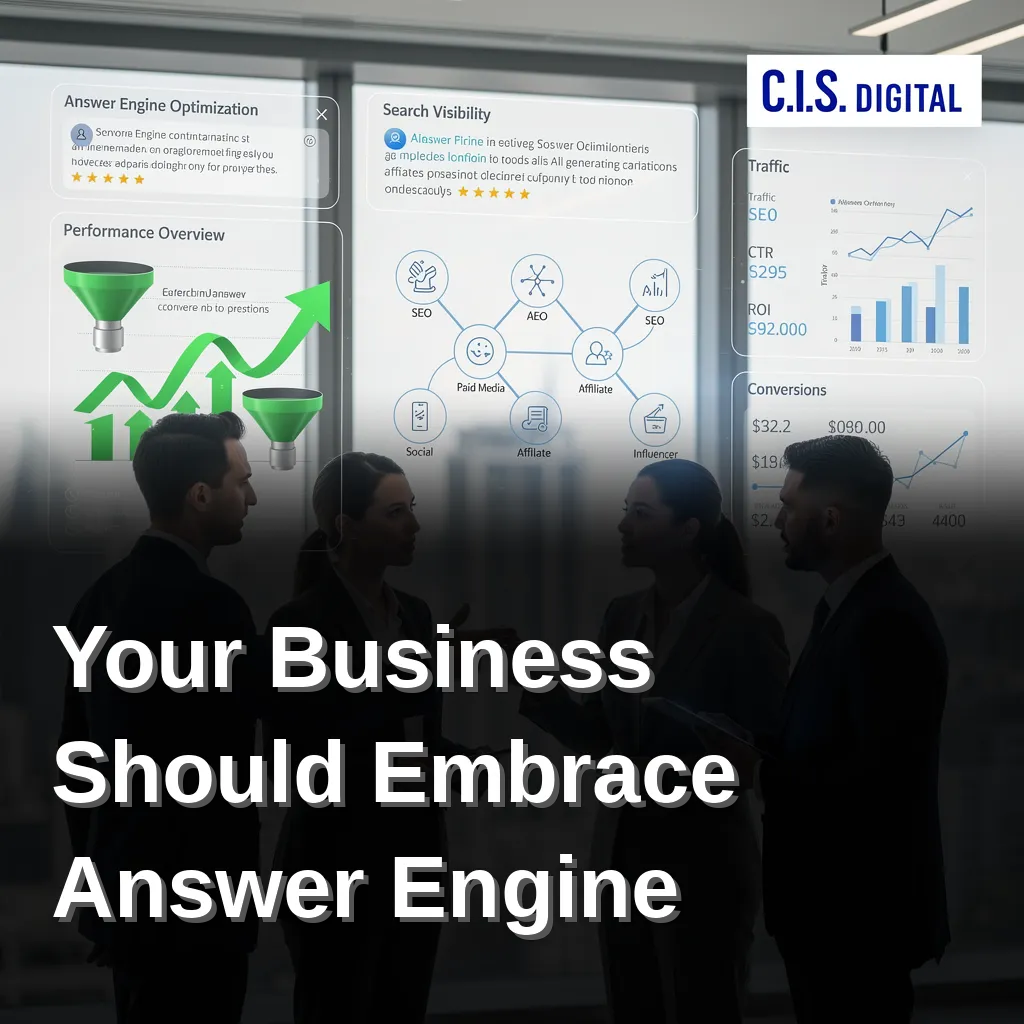
Answer Engine Optimization is the practice of structuring and writing content so that AI-driven systems can accurately extract, summarize, and cite it as a direct answer to a user's question. Where traditional search optimization focuses on ranking a page within a results list, AEO focuses on becoming the source an answer engine selects and quotes.
This requires clear, well-organized content: concise definitions, structured headings, factual accuracy, and language that mirrors how real users phrase their questions. Answer engines reward clarity and authority — they are built to identify the most reliable, relevant response, not simply the most keyword-dense page.
At C.I.S. Digital, we approach AEO as a discipline built on three pillars: structure, substance, and signal. Structure means organizing content so machines can parse it — using descriptive headings, short paragraphs, and clear markup that separates a direct answer from the supporting explanation around it. Substance means the underlying information must be accurate, current, and specific enough to stand on its own as a citation. Signal refers to the broader trust indicators an answer engine weighs, including consistency across a business's published content, clear authorship, and alignment between what a page claims and what the rest of the web confirms about that business. A page can be well written and still be passed over if it falls short on any one of these dimensions, which is why we treat AEO as an integrated content practice rather than a single technical fix.
The Shift from Traditional Search to AI-Generated Answers
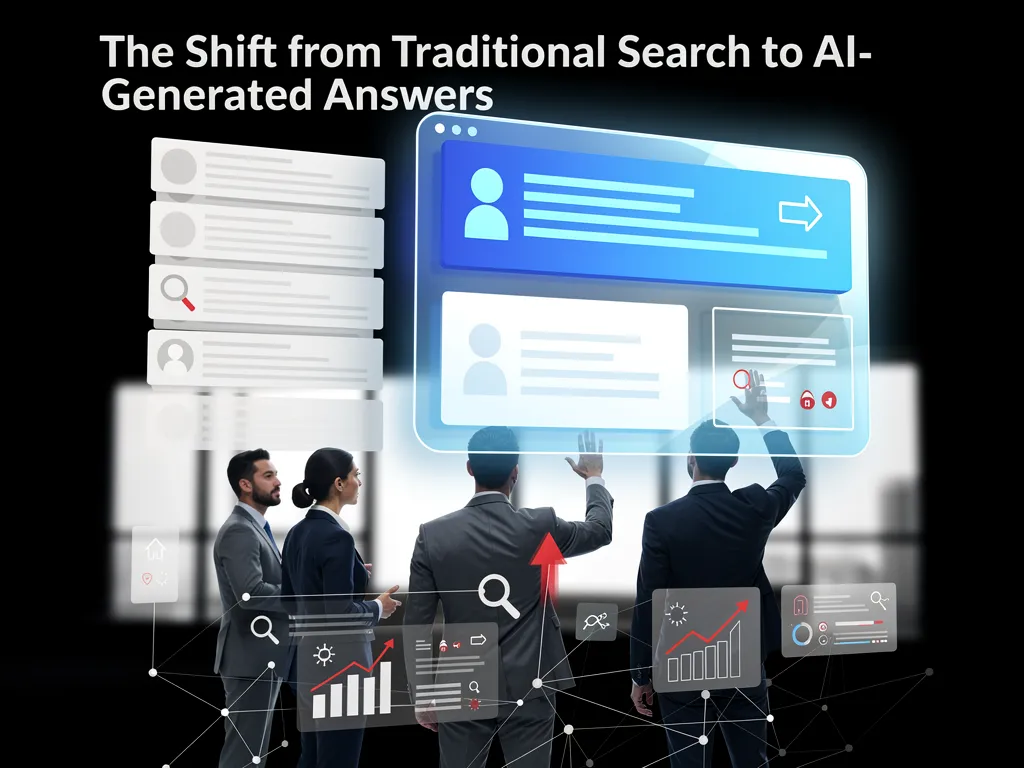
For two decades, ranking on the first page of search results was the primary measure of online visibility. That measure is no longer sufficient. When a user receives a complete answer directly within the search interface, they may never click through to a website at all. Visibility now depends on whether a business's content is chosen as the source behind that answer.
This shift does not eliminate the value of a strong website or well-organized content — it raises the bar for what "well-organized" means, and it redefines what search visibility actually requires. Businesses must now write with precision, structure information for machine comprehension, and establish the kind of topical authority that answer engines are designed to recognize and trust.
The mechanics behind this shift matter as much as the outcome. Traditional search ranking relied heavily on backlinks, keyword placement, and page-level signals evaluated largely in isolation. Answer engines instead synthesize information across many sources at once, comparing how consistently a claim is stated, how clearly it is supported, and how directly it resolves the question asked. A page can rank well under legacy search logic but may still be overlooked by an answer engine if its content lacks clarity, is redundant, or is difficult to extract cleanly. Conversely, a page with modest traditional ranking signals can be selected as a cited source simply because it states the answer plainly and supports it with credible detail. This is a meaningful departure from the assumptions that shaped search strategy for the past twenty years, and businesses that continue to optimize solely for legacy ranking factors will find that strategy increasingly incomplete.
Why AEO Matters for Modern Businesses

It protects visibility as search behavior evolves. Customers increasingly ask questions in natural language and expect an immediate, accurate answer. A business absent from that answer is effectively absent from the customer's decision-making process.
It builds authority and trust. Answer engines prioritize sources that demonstrate expertise and factual consistency. Businesses that invest in accurate, well-structured content strengthen their credibility both with these systems and with the customers who ultimately read that content.
It captures high-intent attention. A user asking a direct question is often close to a decision. Being the cited source at that moment carries significant weight, even when it does not result in an immediate click.
It future-proofs digital strategy. The adoption of AI-generated answers is accelerating, not slowing. Businesses that build AEO into their content strategy now are positioned to adapt as these systems continue to develop, rather than reacting after visibility has already been lost.
Core Strategies for Embracing AEO
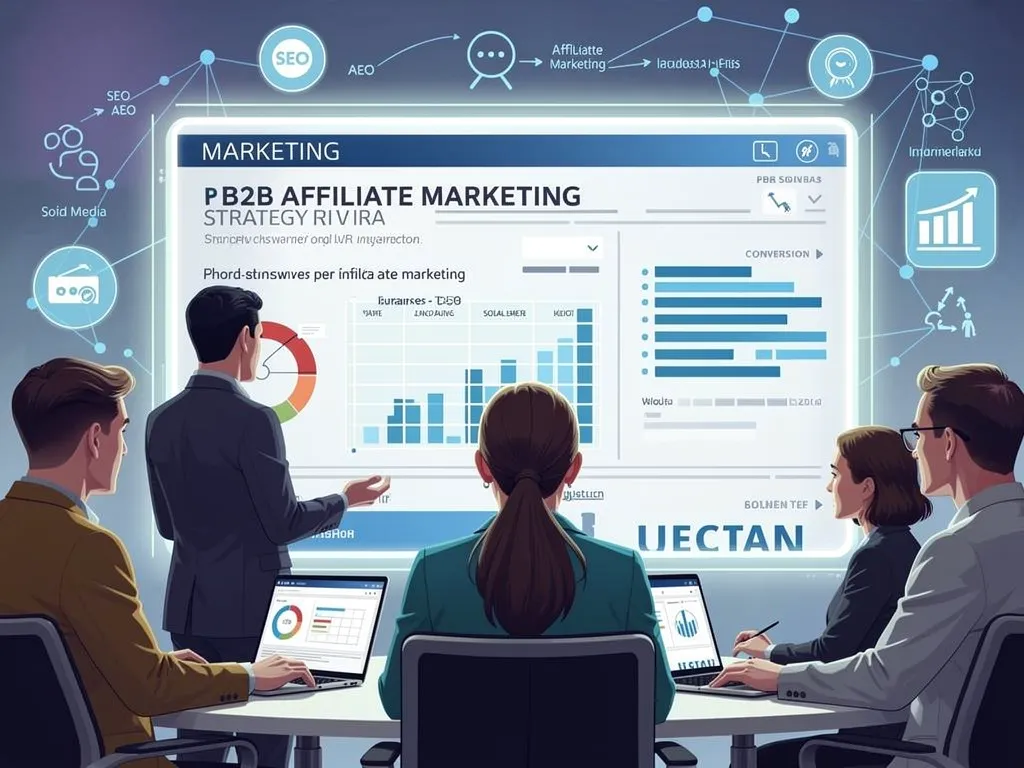
- Answer questions directly and early. Structure content so that a clear, concise answer appears near the top, followed by supporting detail and context.
- Use structured formatting. Headings, lists, and tables help both readers and answer engines parse information quickly and accurately.
- Prioritize factual accuracy and sourcing. Answer engines favor content that is verifiable and consistent with other credible sources.
- Write in natural, conversational language. Reflect the way real customers phrase their questions rather than relying solely on formal keyword phrasing.
- Maintain topical depth. A single well-developed resource on a subject often outperforms several shallow pages, as it signals authority on the topic as a whole.
The Cost of Ignoring AEO

Businesses that delay adapting to AEO are not simply missing an opportunity — they are ceding ground to competitors who are already investing in it. As answer engines become a primary interface for information discovery, the gap between businesses that are cited as trusted sources and those that are not will only widen. Early adoption is a competitive advantage; delayed adoption is a growing liability.
This gap compounds over time. Answer engines favor sources that already demonstrate consistency and authority, which means businesses that establish a strong AEO foundation now are more likely to be selected as those systems refine how they evaluate sources going forward. Businesses that wait are not simply starting later — they are starting from behind, working to catch up to competitors whose content has already been recognized as reliable. At C.I.S. Digital, we work with businesses to close that gap methodically: auditing existing content against how answer engines evaluate sources, restructuring it for clarity and extractability, and building the topical depth that establishes lasting authority. The businesses that treat AEO as a core part of their digital strategy today are the ones best positioned to remain visible as this technology continues to shape how customers find and choose the companies they trust.